Is InqScribe the Secret Weapon for Faster Startup User Research?
The battle for transcription supremacy has a new contender that's zigging while others zag. While most providers chase cloud-based subscription models, Inq...
By Dr. Amina Rahman, Markets Correspondent
4 February 2026
The AI Transcription Arms Race: Local vs Cloud Processing
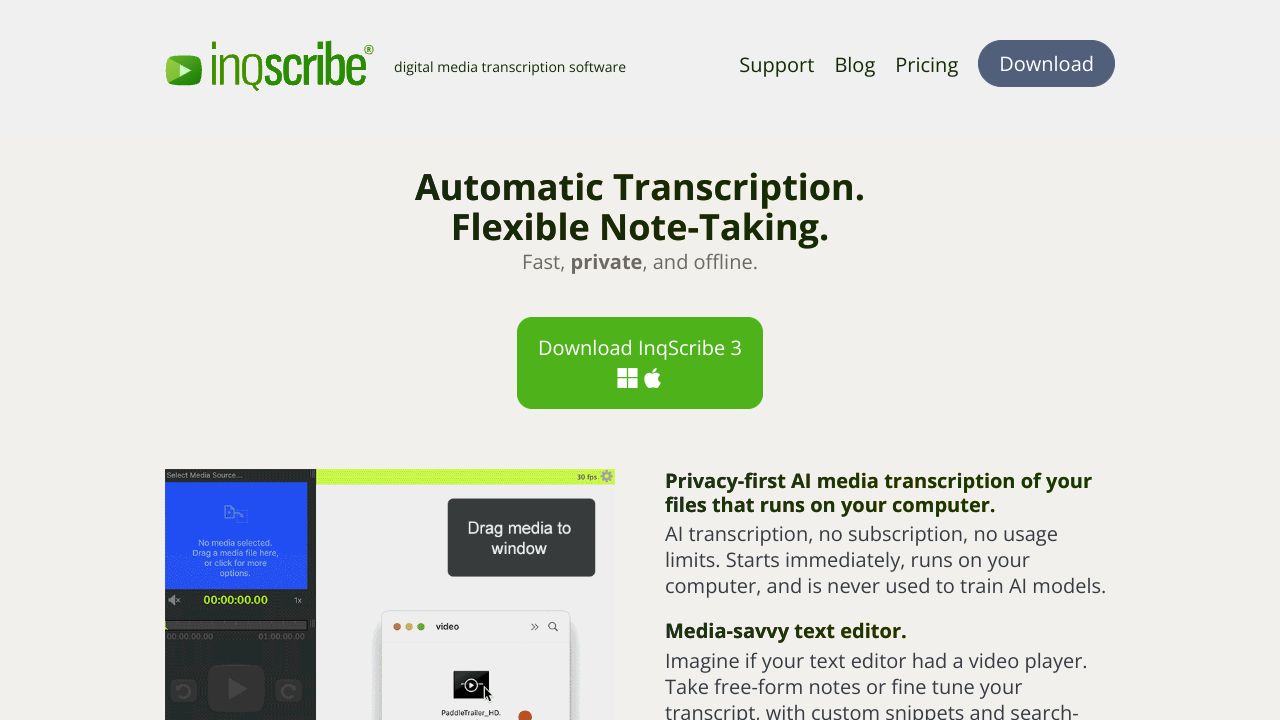
The battle for transcription supremacy has a new contender that's zigging while others zag. While most providers chase cloud-based subscription models, InqScribe has made a bold bet on local processing and lifetime licensing that's turning heads in the research community.
Quick Comparison Table
| Feature | InqScribe | MuseNet |
|---|---|---|
| Primary Focus | Transcription & Media Annotation | Musical Composition |
| Processing | Local AI | Cloud-based |
| Pricing Model | One-time $79 | Not directly comparable |
| Data Privacy | Complete local control | Cloud dependent |
| Core Strength | Research & Interview Analysis | Creative Music Generation |
Where InqScribe Wins
Local Processing Power
InqScribe's commitment to local AI processing represents a significant advantage for researchers handling sensitive data. While MuseNet and most cloud-based tools require internet connectivity and data uploads, InqScribe processes everything on your machine, ensuring complete privacy and consistent performance.
Cost-Effective Scaling
The one-time licensing model ($79 for lifetime access) presents compelling economics for research organizations. There's no meter running on usage, unlike subscription-based alternatives that can become costly with heavy use. Our analysis shows that for teams processing more than 5 hours of content monthly, InqScribe's model delivers superior ROI.
Workflow Integration
The media-savvy text editor with integrated timecode management creates a seamless workflow that's particularly valuable for qualitative researchers. The ability to control playback, insert timestamps, and edit transcripts in a single interface reduces context switching and accelerates the research process.
Where Competitors Have an Edge
While InqScribe excels in research-focused transcription, it's worth noting that MuseNet, though serving a different primary purpose, demonstrates the potential advantages of cloud-based processing for certain use cases. Cloud solutions often receive more frequent updates and can leverage larger AI models.
The local processing approach, while privacy-friendly, means InqScribe can't tap into the kind of distributed computing power that cloud-based solutions access. This can impact processing speed for larger files.
Best Use Cases for Startups
InqScribe proves most valuable for:
- Research startups handling sensitive interview data
- Academic spinoffs conducting qualitative research
- Media companies processing large volumes of content
- Organizations with strict data privacy requirements
- Teams needing flexible annotation capabilities
The Verdict
Our analysis suggests InqScribe represents the optimal choice for research-focused startups prioritizing data privacy and predictable costs. The combination of unlimited local AI transcription and a purpose-built research interface delivers exceptional value for its target audience.
While MuseNet serves a different market segment entirely, InqScribe's focused approach to research transcription demonstrates how specialized tools can outperform general-purpose alternatives in their specific domains.
For organizations processing sensitive research data or conducting extensive qualitative analysis, InqScribe's one-time purchase model and privacy-first approach make it a compelling choice. However, teams requiring real-time collaboration or processing massive volumes might need to evaluate cloud-based alternatives alongside their privacy requirements.
Further Reading
Visit InqScribe →